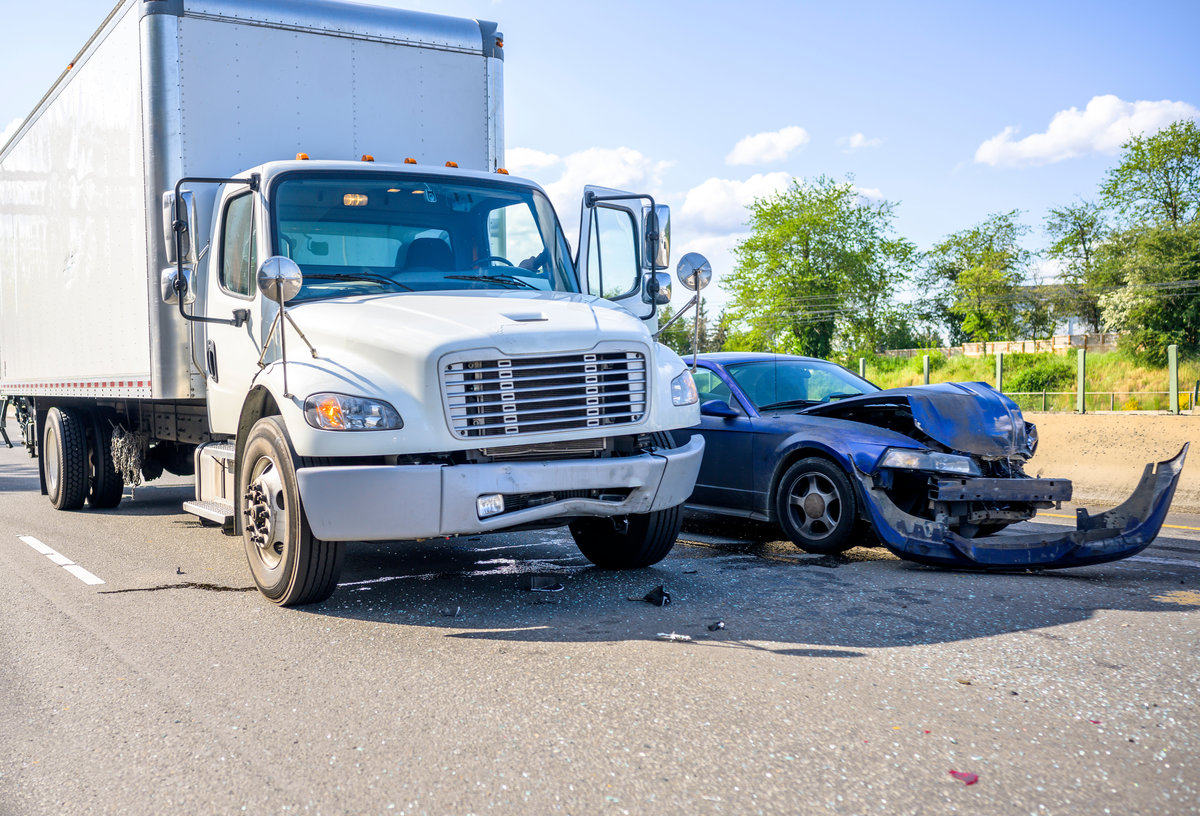
A commercial truck traveling at highway speed carries thousands of pounds of force, and when that force is unleashed in a collision, the aftermath is devastating. Yet in the hours and days that follow, one of the most critical battles in a truck accident case is not fought in a courtroom. It is fought over a small electronic device embedded in the truck itself: the black box.
If you have been seriously injured in a truck crash on a New Jersey highway, you need an attorney who knows how to move fast and fight hard. At the Law Offices of Luis Martinez, we bring over 34 years of personal injury experience to every truck accident case we handle, and we understand that the evidence inside that black box can determine whether you walk away with full compensation or nothing at all.
What Is a Truck’s Black Box?
Commercial trucks are not simple machines, and the data they generate reflects that complexity. The term “black box” actually refers to several distinct electronic systems working simultaneously aboard a large truck.
The Main Types of Recording Devices
Most modern commercial trucks carry at least two major categories of recording equipment. The Electronic Logging Device, or ELD, is federally mandated under FMCSA regulations and tracks a driver’s hours of service, helping enforce rules designed to prevent fatigued driving on our roads. Separately, an Event Data Recorder, or EDR, captures crash-specific data including vehicle speed, braking patterns, throttle position, and seatbelt status in the seconds surrounding an impact.
Some trucks also carry Engine Control Modules that log engine performance and maintenance data, as well as GPS telematics systems that record real-time location, route history, and driving behavior. Together, these systems create a comprehensive picture of what the truck and driver were doing before, during, and immediately after a crash.
Why This Data Matters to Your Case
When a truck accident occurs on a Bergen County highway, the trucking company’s rapid-response team is often on the scene within hours, not to help you, but to protect their client. One of their priorities is controlling the black box data before it can be used against them. The data tells an objective, machine-generated story: whether the driver was speeding, whether they braked, whether they had been driving for too many consecutive hours. That story is often far more powerful than any witness testimony.
The Evidence Disappears Faster Than You Think
Time is not on your side in a truck accident case, and understanding why requires knowing how this data is stored. EDR data can be overwritten automatically once the truck returns to service after a crash. ELD records must be retained for six months under federal regulations, but that clock starts running from the time of the trip, not the time you file a lawsuit.
Sending a Preservation Demand Letter
One of the first steps we take after being retained in a truck accident case is to send a formal preservation demand letter to the trucking company and the carrier. This letter instructs them to preserve the truck in its post-crash condition, refrain from powering or repairing the truck’s electronic systems, and immediately download and preserve all EDR and ELD data. Without this step, critical evidence may be gone before the case ever reaches discovery.
What Happens When Data Goes Missing
If a trucking company fails to preserve data they were legally required to maintain, courts may allow juries to draw an adverse inference, meaning they can conclude the missing evidence would have supported your claim. We know how to identify these violations and use them to strengthen your position at the negotiating table and in court.
How We Use Black Box Evidence to Build Your Case
Raw data alone does not win cases. It takes experienced legal and technical analysis to transform it into compelling proof of negligence. We work with qualified accident reconstruction experts who can analyze EDR output, cross-reference it with ELD hours-of-service logs, and map it against the physical evidence at the crash scene. This process can confirm or directly contradict the version of events the trucking company presents.
For example, the data may reveal that a driver was traveling 15 miles per hour over the posted speed limit, that no braking occurred until a fraction of a second before impact, or that the driver had been behind the wheel for 18 consecutive hours in violation of federal hours-of-service rules. These are not theories; they are recorded facts.
Contact Luis Martinez Law After a New Jersey Truck Accident
Trucking companies have attorneys, insurers, and investigators working to minimize your claim from the moment a crash occurs. You deserve the same level of preparation and tenacity working for you. Attorney Luis Martinez is a Certified Civil Trial Attorney, a designation held by fewer than 1% of attorneys in New Jersey, with more than three decades of experience handling complex personal injury cases throughout Bergen County and the surrounding region. When you call our firm, you are not routed to a case manager. You reach Luis directly, including on his personal cell phone. Call a lawyer, not a billboard.
Do not wait to take action. Black box data can vanish within days, and every hour that passes narrows your window to preserve the most important evidence in your case. Contact us today for a free consultation and let us start fighting for you immediately.